
Artistic Legacy
Five Centuries of Devotion in Art
No image in the New World has been copied, painted, embroidered, carved, and loved so often. Here is something of what the faithful have made in her honour.
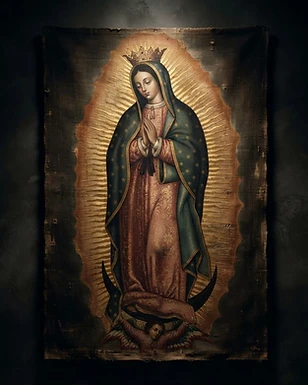
The Image Itself
Ayate fiber · Tepeyac, 1531
Every work that follows is a copy, an echo, a child of this one. Not made by human hands, it has served as the pattern for five centuries of devotional art across two continents.

Devotional Portrait
In the tradition of the colonial workshops
From the seventeenth century onward, Mexican masters — Juan Correa, Miguel Cabrera, José de Ibarra — painted the image again and again for cathedrals, convents, and family altars, often adding the four apparition scenes in the corners.
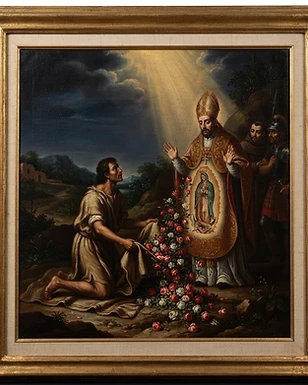
The Unfolding of the Tilma
Narrative devotional painting
The most beloved scene in the whole tradition: Juan Diego before Bishop Zumárraga, the roses falling, the image revealed. Painted on retablos, church walls, processional banners, and countless holy cards.
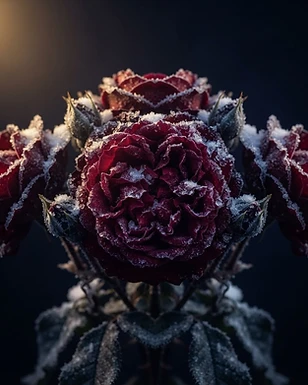
Roses of Castile
Floral still life in the devotional manner
The rose became her emblem. Painted, embroidered on vestments, carved into altar rails, and carried in living bunches by pilgrims climbing Tepeyac each December.

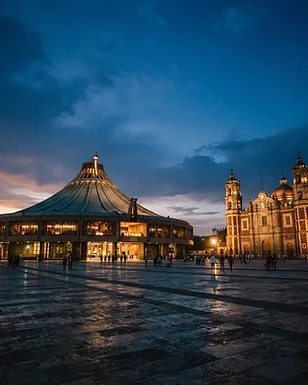
The House She Asked For
Architectural devotion
She asked for a temple, and the faithful have not stopped building: the hermitage of 1531, the old Basilica of 1709, and the new Basilica of 1976 — architecture itself become an act of love.
The Art of the People
Popular Traditions
Retablos and Ex-Votos
Small paintings on tin, offered in thanksgiving for a cure or deliverance. Made by ordinary hands, they show the trouble, the prayer, and Our Lady above — and are inscribed with a few plain words of gratitude. Thousands hang in the Basilica's collection.
Embroidery and Textile Work
Because the original is itself a cloth, embroidery holds a special place: mantles, banners, altar frontals, and the fabric images carried in procession by parishes and confraternities throughout the Americas.
Talavera and Tilework
Glazed ceramic images of the Virgin set into house façades, courtyard walls, and street corners — turning whole neighborhoods into places of quiet public devotion.
Danza and Procession
Not all art is painted. The matachines and concheros who dance before her image on December 12 offer their labor and their bodies as the indigenous faithful have done since the first century of the devotion.
Sacred art does not compete with the tilma; it points to it, as the tilma points to her, and as she points always to her Son.