
The Tilma Archive
Sacred Gallery
Behold the image not made by human hands, and the story it tells.
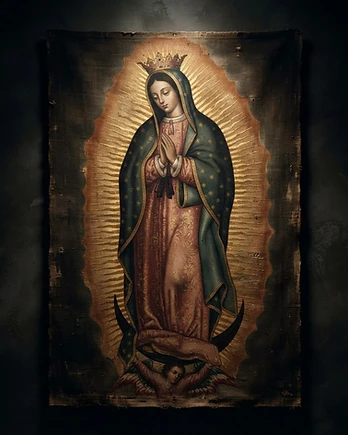
The Miraculous Image
The sacred image imprinted on St. Juan Diego's tilma in 1531. The agave-fiber cloak, which should have deteriorated within decades, remains intact after nearly five centuries — venerated today in the Basilica at Tepeyac.

Her Countenance
Our Lady's face is bowed in humility — she is not God, but points to Him. Her mestiza features embraced both the Spanish and indigenous peoples, drawing millions to the faith.
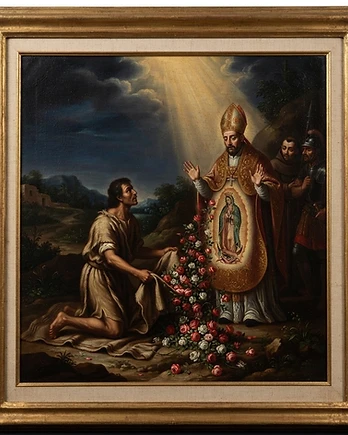
The Miracle of the Roses
On December 12, 1531, Juan Diego opened his tilma before Bishop Zumárraga. Castilian roses, gathered in winter frost, fell to the floor — and the image of the Virgin appeared upon the cloth.


Roses in December
The sign requested by the Bishop: roses blooming impossibly on frozen Tepeyac. In the language of the apparition, they signify God's power to bring life where there is none.

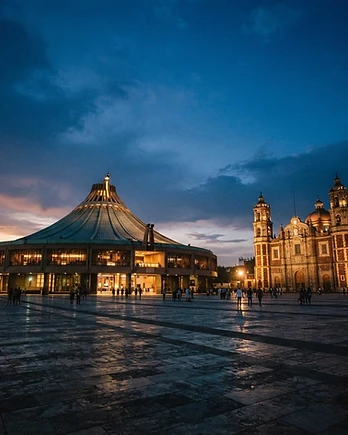
The Basilica at Tepeyac
The Basilica of Our Lady of Guadalupe in Mexico City — the most visited Marian shrine in the world, receiving some twenty million pilgrims each year at the foot of Tepeyac hill.
A Codex in Cloth
The Symbolism of the Image
The Rays of the Sun
She stands before the sun, greater than the Aztec sun god — yet the light comes from behind her, for she bears the true Light.
The Crescent Moon
She stands upon the moon, recalling the woman of Revelation 12 and her triumph over the serpent-moon deity.
The Black Sash
Worn high on the waist in the Aztec manner, it signifies that she is with child — she carries Christ within her.
The Stars on Her Mantle
The stars match the constellations over Mexico on December 12, 1531 — heaven itself woven into her garment.
The Four-Petaled Flower
The Nahui Ollin over her womb, the indigenous symbol of divinity, marks the presence of the true God she carries.
Her Bowed Head and Folded Hands
She is not a goddess but the handmaid of the Lord, in an attitude of prayer and perfect humility.