
A Codex in Colour
The Symbolism of the Tilma
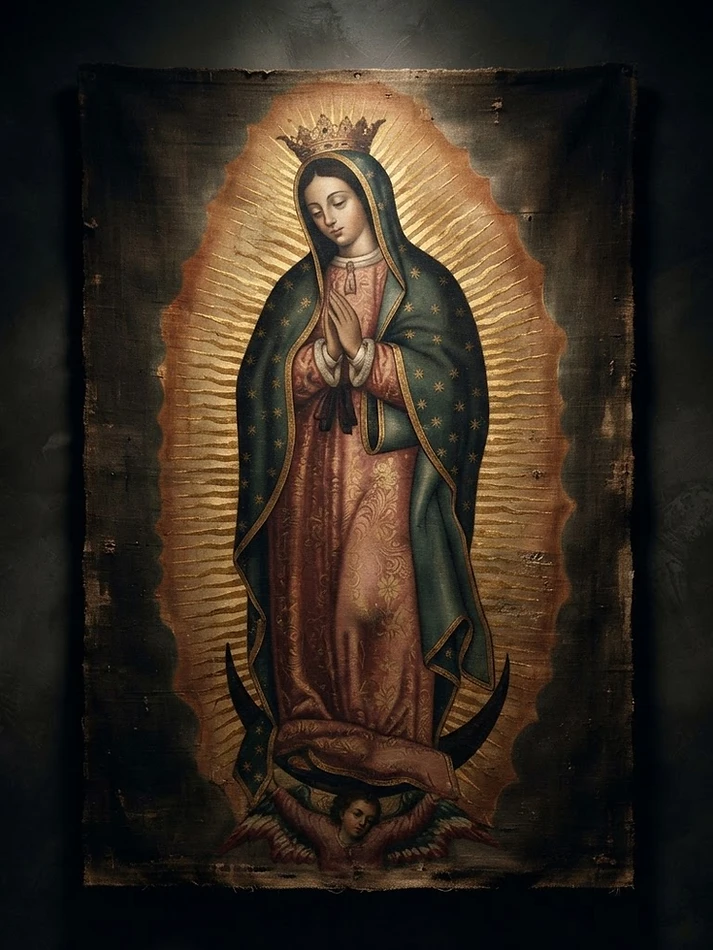
To the Spanish it was a portrait; to the indigenous peoples of Mexico it was a text. Every detail of the image speaks — in the pictorial language of the Nahua and in the language of Sacred Scripture.
Draw Near
Read the Image
Choose a mark to draw near
Reading the image
Every detail of the tilma carries meaning. Draw near to one of the marks to read what it says — the light behind her, the stars upon her mantle, the flower over her womb, the moon beneath her feet.
The image is read the way a Nahua codex is read: not as decoration, but as a message set down in signs its first readers understood perfectly. Together those signs announce a young woman, with child, who stands before the sun and upon the moon — who is greater than the gods of Tepeyac, yet is herself not God, for she bows her head and folds her hands in prayer to Another.
The Rays of the Sun
She stands before the sun, greater than the Aztec sun god — yet the light comes from behind her, for she bears the true Light.
The Crescent Moon
She stands upon the moon, recalling the woman of Revelation 12 and her triumph over the serpent-moon deity.
The Black Sash
Worn high on the waist in the Aztec manner, it signifies that she is with child — she carries Christ within her.
The Stars on Her Mantle
The stars match the constellations over Mexico on December 12, 1531 — heaven itself woven into her garment.
The Four-Petaled Flower
The Nahui Ollin over her womb, the indigenous symbol of divinity, marks the presence of the true God she carries.
Her Bowed Head and Folded Hands
She is not a goddess but the handmaid of the Lord, in an attitude of prayer and perfect humility.
The Whole Message in One Line
"I am the ever-virgin Holy Mary, Mother of the true God through whom everything lives." Everything on the cloth serves those words — and points past her to her Son.